Thursday, June 11, 2009

My critique, of Kerouac's critique, of the Collegiate life

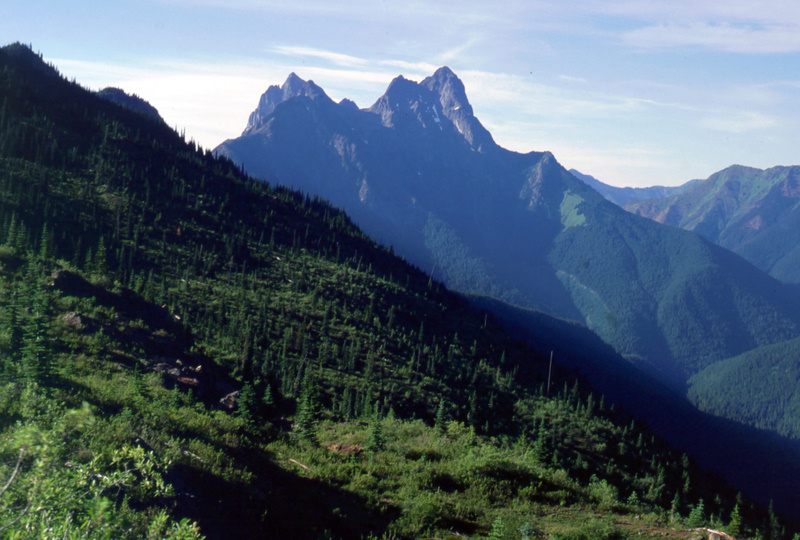
"-colleges being nothing but grooming schools for the middle-class non-identity which usually finds its perfect expression on the outskirts of the campus in rows of well-to-do houses with lawns and television sets in each living room with everybody looking at the same thing and thinking the same thing at the same time with the Japhies of the world go prowling in the wilderness to hear the voice crying in the wilderness, to find the ecstasy of the stars, to find the dark mysterious secret of the origin of faceless wonderless crapulous civilization"


-Jack Kerouac,  The Dharma Bums (39).

Kerouac is in one way, correct.  College education is locked in a traditional method of education; that one purchases and consumes textbooks, and regurgitate the materials at the behest of a professor, who assigns a grade based on the proficiency of said regurgitation.  It is rote education based on a model of information memorization and synthesis, in the form of seven page research papers and blue book exams.

But, Kerouac is wrong to blame America's conformist trends on the ubiquity of undergraduate education.  Kerouac, and many like him, are clearly looking for authentic and genuine experience through deep introspection and reflection of the world around them.  Such experiences are found in the real world though hard living, tough choices and dangerous situations; such authenticity cannot be found in a textbook or a lecture.  But the absence of authenticity from the experience college students learning experience is not a full impeachment of the collegiate model.  If everyone simply tramped around in along the mountain ranges of the American wilderness, nothing would get done; the discoveries of scientists, the works of artists, and the inventions of the entrepreneur are all a part of the luxurious lifestlye that allows young men and women to enroll in a university and care only about their intellectual and social development.   But in turn, if everyone spent every ounce of their energies simply trying to move, create, and invent, such an existence would be aimless. 

 There is room for both action and introspection-ideally both working together in a dynamic system.  

Monday, May 4, 2009

In Conclusion


When trying to eradicate the foreign supply of drugs, we seem to only “succeed in shifting sources, not in reducing drug abuse (Gray par 13).  Similarly, the domestic arm of demand reduction has been met with equal setbacks.  Drug use seems to be a persistent, if not pervasive aspect of modern America.  I believe this is the hidden trap of drug policy; the perception of prohibition as the status quo, and the interpretation of drug use as a corrosive and immoral byproduct of America’s industrialization and modernization.  

Historically, drug use has been common in human cultural the policy of prohibition is a recent development of the 20th century.  Looking to the future, this author believes that America’s, and other nation’s policymakers need to accept that affinity for drug consumption as a given and work toward more realistic policy goals.  Perhaps this is the definition of retreat, or the acceptance of failure, but the truth of our current situation is that “[…] culture and addiction are powerful forces—equal or greater than all the legal barriers and social programming arrayed against them” (Simon, Burns 541).  The goal of policy is to be in congruence with societies values, some reassessment of just what America’s values concerning drugs is in order.  In cold policy terms, the implementation of some kind of decriminalization/legalization initiative is the only possible step toward a more effective approach.

Tuesday, April 28, 2009

Quick Thought

Before I go to bed: why do we look at torture with a partisan lens?

Monday, April 27, 2009

Modern 'Calvinism'


Since this is supposed to be an economics blog, (in intellectual content, anyways) this seems appropriate.

The irony, I see anyways, is how relevant Calvin's voice is in our current political/economic climate.  It's frustrating that it's taken so long for the United States to have a cultural/economic crisis on a national scale to finally engage in some soul-searching about our overall political philosophy and understanding of personal ethics.  We live very much in a "me"- based culture; which has some positives and negatives.  One of the biggest negatives that I see, is an insistence on 'if it doesn't effect me, why should I care?'  I see this commonly coming from conservative and especially libertarian political affiliates.  THe biggest problem with this, as I see it, is a willful ignorance of not only the practical issue of second- and third-tier effects, but also a override of the concept of empathy.  

People suffer, and it is a shame.  A person suffering, even if it does not immediately, or even transitively effect you, I feel a ethical actor should have an empathic approach in mind. 

Hilzoy (I believe) wrote a few weeks/months ago: 

if morality requires anything at all, it requires that we take other people seriously as people, with their own independent existence, rather than using them as screens onto which we project our own psychological needs at will. So I would think that anyone who was genuinely concerned to do the right thing would recognize this sort of freefloating hostility, and the lack of concern for others that lets it emerge, as vices dressing themselves up as virtues.
I'd like to build on this point some more later.  I feel like this is, in a way, at the heart of the liberal philosophy, and the mark of a mature society.

I actually

ran this morning?  Sheeeeit.  

No time or distance (yet).  Just trying to get my head straight.

Sunday, April 26, 2009

Is Jeff Jacoby Stupid?

Or better yet, just how stupid is Jeff Jacoby?

In his latest column, Jeff makes an economic argument.  He suggests that, since environmentalists are for high gas prices, they also should support the biggest gas-guzzling cars.  The reasoning goes that, since low mpg vehicles use more gas, they'll drive gas prices up faster, and reduce gas consumption.  Whereas high-mpg vehicles would have the opposite effect, reducing the petroleum consumed, and keeping gas demand stable (or even reducing it).  

While I am happy Jeff understands the concept of supply and demand, and I'm sure he feels like he's really put one over the leftists with his awesome point to prove they wrong; he, like certain Texan representatives, Jeff's awesome attempt to make a sweet political point just makes him look stupid.  Why?  Because while he stuck around in Econ 101 to learn that rule of supply and demand, he didn't stay long enough for the coverage of externalities.  Carbon consumption hurts everyone, in the form of increased presence of greenhouse emissions, throwing the planets carbon cycle out of whack, and contributing catastrophic weather.

So Jeff's point, that environmental activists should support the use of low-mpg vehicles, because they'll drive of the price of gasoline up, misses the point of why high gas prices would be desirable; which is to reduce overall petrol use.  If everyone switched their car from whatever they owned; to a hybrid, or any general 'low-mpg vehicle,' then gas consumption would fall.  Which is the point.  A high price of gas is just another way to reach the same end, a reduction of carbon emissions.

I can go even further into this, if we start considering the elasticity of gasoline demand.  Gas is, and will be for quite sometime, a necessary part of the U.S. (and global) economy.  This makes the  individual, and the economy as a whole, very insensitive to the price of gasoline - i.e. our demand is inelastic.  So why not gradually reduce demand over time, with the use of low-mpg vehicles, allowing this very essential, and soon to be scarce resource to be slowly reduced from demand, rather than drive a ton of Hummers and invite potential oil shocks?  

So this whole piece on how environmentalists are "silly" in lobbying for increased low-mpg vehicle use isn't, in any way, an intelligent addition to our policy debate.  It's sophistry, and a really lame example of that too.

Saturday, May 31, 2008

Summer Ultimate

I hold that summer ultimate is one of the hardest seasons.  Yeah, springtime is where it's at, competitively; but there's a whole team support system that helps maintain the intensity.  It's so east to feel a huge letdown going into the summer, to stop training and basically give up any standards one had about performance. And then there's you non-athlete friends who just want to smoke and drink every night.

Don't get me wrong, I love getting down and partying over the summer - I play frisbee.  But yo-yoing your body between pack fitness in the spring to complete cardiovascular destruction in the summer, only to restarting fall training is a recipe for disaster.

To play spring ultimate, you have to be physically strong.  To play summer ultimate, you have to be mentally strong.